 Glasgow Office Cleaning
COSHH Compliance for Commercial Cleaning in Glasgow
What COSHH Actually Requires from You
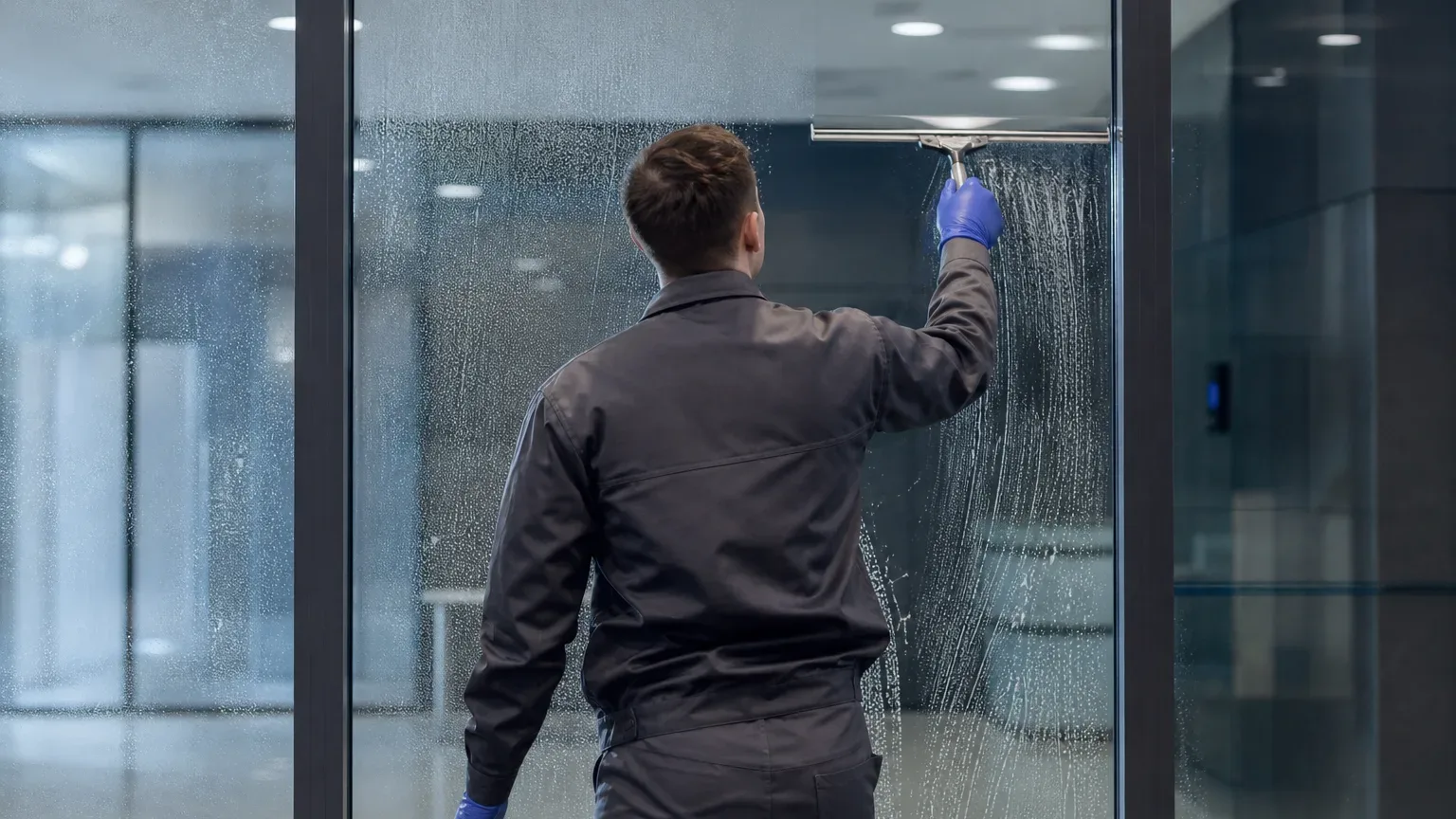
The Control of Substances Hazardous to Health Regulations 2002 place a legal duty on employers to assess, control, and monitor exposure to hazardous substances in the workplace. For Glasgow businesses that use or commission cleaning services, this covers everything from bleach-based sanitisers to solvent floor cleaners used by contracted staff on your premises. You do not need to handle the chemicals yourself to carry a responsibility. If a cleaning operative works in your building, the COSHH duty extends to your environment.
A compliant approach requires a written COSHH assessment for each substance in use, identification of exposure risks, and documented controls to manage those risks. The HSE expects assessments to be reviewed at least annually, or whenever products, staff, or procedures change. Keeping a COSHH file on-site, accessible to cleaning staff and your own facilities team, is best practice and often a requirement during insurer or auditor visits.
Why Is COSHH-Compliant Cleaning Important for Glasgow Businesses?
Non-compliance exposes a Glasgow business to enforcement action from the Health and Safety Executive, civil liability for staff injuries, and potential voiding of public liability insurance. Prosecutions are not restricted to manufacturers or large industrial sites. Any employer whose cleaning contractor uses an unlabelled product, mixes chemicals unsafely, or operates without site-specific assessments is operating outside the law.
Beyond legal risk, COSHH compliance directly affects indoor air quality. Poor ventilation combined with high-VOC cleaning agents raises indoor pollutant concentrations that affect staff concentration and respiratory health. Glasgow's older commercial buildings, particularly Victorian-era offices in the Merchant City or converted warehouse spaces in Finnieston, often have limited natural ventilation, making product selection and dilution rates even more critical. A compliant contractor brings the right products for the right environment, not a one-size approach.

What Chemicals Are COSHH-Compliant for Office Cleaning in Glasgow?
No single product list defines COSHH compliance; what matters is that every substance used has an up-to-date Safety Data Sheet (SDS), a site-specific risk assessment, and appropriate controls documented before use. Common office cleaning products that appear in compliant programmes include diluted multi-surface disinfectants (quaternary ammonium compounds at correct concentrations), low-VOC glass cleaners, and pH-neutral floor solutions compatible with the floor type.
Products containing bleach (sodium hypochlorite) are frequently used in washrooms and are COSHH-compliant when stored, diluted, and applied correctly, but they require specific PPE guidance in the risk assessment. Eco-friendly alternatives are increasingly standard: biodegradable and low-VOC cleaning products satisfy COSHH requirements while reducing chemical exposure and waste disposal obligations. The key test is not the product brand but whether the SDS is current, the operative knows the hazards, and adequate controls are in place before they open the bottle.
Building a COSHH-Compliant Cleaning Programme
The Assessment Process
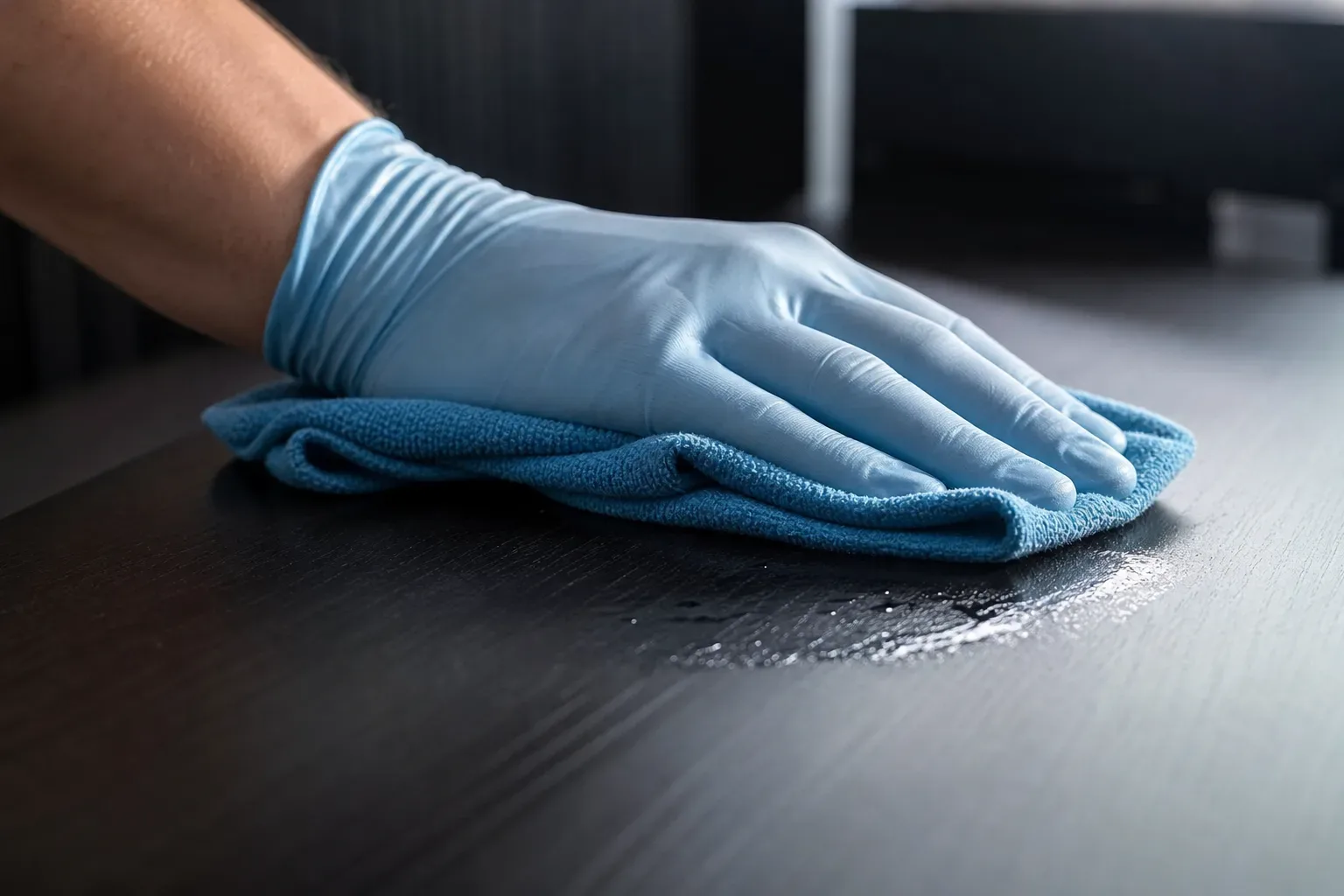
A compliant COSHH assessment starts with a full product inventory: every cleaning agent, descaler, sanitiser, and specialist treatment used on your site. Each product's SDS, available from the manufacturer, informs the exposure route (inhalation, skin contact, ingestion), the occupational exposure limit where one exists, and the required controls. Controls follow a hierarchy, with elimination or substitution first, engineering controls (ventilation, dilution equipment) second, and PPE as the last line of defence rather than the first.
For a typical Glasgow office, assessments cover washroom sanitisers, kitchen cleaning products, carpet spot treatments, and any specialist floor or glass treatments. The assessment must be specific to your site, not a generic template downloaded from a supplier's website. If your contractor provides the COSHH file, review it: check that product names match what is actually on your premises and that the review date is current.
Staff Training and Supervision
Written assessments are only effective if cleaning staff have read, understood, and been trained on them. Supervisors should confirm that operatives know which products require gloves, which require eye protection, and which cannot be mixed. Mixing bleach-based and acid-based cleaners, for example, releases chlorine gas, a hazard that appears in real incidents involving cleaning staff in poorly supervised office environments.
Reputable commercial cleaning contractors in Glasgow conduct product-specific induction training for new operatives and refresh that training whenever products change. Ask any prospective contractor how they document and evidence training completion. A signed training record per operative per product is the standard you should expect.
Eco-Friendly Products and COSHH
Switching to biodegradable, low-VOC formulations does not remove COSHH obligations, but it typically simplifies them. Lower hazard classifications mean shorter, more straightforward risk assessments and reduced PPE requirements in many cases. Products certified under recognised environmental schemes still require SDS documentation, but their occupational exposure profiles are generally more manageable.
For Glasgow businesses targeting sustainability accreditations or reporting under ESG frameworks, using a cleaning contractor who operates with certified eco-friendly products creates an auditable supply-chain record. That record can support ISO 14001 (BS ISO 14001) environmental management objectives if your organisation is working towards that standard.
Verifying Your Contractor's Compliance
Before signing a commercial cleaning contract, ask for the contractor's COSHH file for a comparable site. Check that it contains individual assessments, not a single generic document. Confirm that their public liability insurance carries a minimum of £5 million cover, which is the standard minimum threshold, and that it was not issued with exclusions relating to chemical use or property damage from cleaning products.
Staff vetting matters alongside chemical compliance. In Scotland, cleaning operatives should hold at minimum a Basic Disclosure Scotland check; roles that bring staff into contact with vulnerable groups require PVG scheme membership. A contractor who cannot confirm their vetting status introduces a safeguarding risk alongside any chemical one.
Contract terms are relevant here too. Standard commercial cleaning contracts run a minimum of three months. That duration is enough to verify COSHH practice in operation, not just on paper. Use an early review point, around four weeks in, to walk through the COSHH file with the supervisor, check that the products on-site match the assessed list, and confirm that any site-specific risks you raised at the start have been incorporated.
Getting a Quote and Moving Forward
A Glasgow cleaning contractor who takes COSHH seriously will ask questions about your site before pricing. They will want to know your floor types, ventilation, any food preparation or clinical areas, and whether you have specific product preferences or restrictions. That conversation, happening before the quote, is itself a compliance signal.
Standard office cleaning rates in Glasgow run from £12–£18 per hour for regular contracted work, with specialist or deep-clean services priced at £20–£35 per hour given the more complex products and equipment involved. Deep cleans for smaller offices up to around 1,000 sq ft typically fall in the £150–£400 range. Any quote should be accompanied by confirmation of insurance, a sample COSHH file, and evidence of staff vetting procedures. Request a written quote within 24–48 hours; a contractor who takes longer for a standard enquiry may reflect the same pace in their compliance administration.

Frequently Asked Questions
Why Is COSHH-compliant Cleaning Important for Glasgow Businesses?
COSHH compliance is a legal requirement under the Control of Substances Hazardous to Health Regulations 2002. Glasgow businesses that use or commission cleaning services must ensure hazardous substances are assessed, controlled, and documented. Non-compliance can result in HSE enforcement action, staff injury claims, and insurance complications. Older commercial buildings common in central Glasgow often have limited ventilation, making correct product selection and risk assessment especially important.
What Chemicals Are COSHH-compliant for Office Cleaning in Glasgow?
COSHH compliance is not defined by a specific product list. Any cleaning product is compliant when it has a current Safety Data Sheet, a site-specific risk assessment, documented controls, and trained operatives. Common compliant products include diluted quaternary ammonium disinfectants, low-VOC glass cleaners, pH-neutral floor solutions, and correctly used bleach-based washroom sanitisers. Biodegradable and low-VOC products are increasingly used as standard because they carry lower occupational hazard profiles while still meeting all COSHH documentation requirements.
Who Is Responsible for COSHH Compliance When a Cleaning Contractor Works on My Premises?
Both the employer and the cleaning contractor carry responsibilities. As the premises owner or occupier, you must ensure that the working environment is safe and that you have visibility of the substances being used in your building. The cleaning contractor is responsible for producing and maintaining COSHH assessments for the products they use, training their staff, and providing appropriate PPE. Reviewing your contractor's COSHH file and confirming it reflects the actual products on your site is good practice for any Glasgow business.
How Often Do COSHH Assessments Need to Be Reviewed?
COSHH assessments should be reviewed at least annually, in line with HSE guidance. They also need updating whenever there is a change in the products used, the cleaning methods applied, the site conditions, or the staff carrying out the work. A dated review record should be kept in the COSHH file on-site. If a contractor cannot show you a review date on each assessment, treat that as a compliance gap.
What Should I Check Before Hiring a COSHH-compliant Cleaning Contractor in Glasgow?
Ask to see a sample COSHH file from a comparable site, and confirm it contains individual product assessments rather than a single generic document. Check that public liability insurance provides at least £5 million cover without chemical-use exclusions. Confirm that all staff hold at minimum a Basic Disclosure Scotland check, with PVG scheme membership for any roles involving vulnerable groups. A contractor who asks about your specific site conditions before quoting is demonstrating the kind of due diligence that COSHH compliance requires.