 Glasgow Office Cleaning
Daytime vs Out-of-Hours Office Cleaning in Glasgow

Choosing the Right Cleaning Window for Your Business
Scheduling is one of the most practical decisions in any office cleaning contract, and it directly affects staff productivity, security, and cost. Glasgow businesses running anything from a city-centre professional services firm to a multi-floor call centre face the same core question: do you bring cleaners in during the working day or after everyone has left? The answer depends on your occupancy pattern, your security requirements, and what your budget can accommodate.
What Does Out-of-Hours Office Cleaning Actually Mean
Out-of-hours office cleaning refers to any cleaning scheduled outside your standard business hours, typically before 8:00 or after 18:00 on weekdays, and at any time on weekends. Many Glasgow businesses default to this arrangement because it keeps cleaning activity invisible to staff and clients. The office is handed back clean each morning without anyone having watched the process.
The practical appeal is real. Cleaners have unrestricted access to every desk, meeting room, and shared space without navigating around people. Vacuuming, mopping, and emptying bins can all happen simultaneously rather than in staged, interruption-minimising blocks.
Security Considerations After Hours
Out-of-hours access does introduce legitimate security questions. Cleaning staff will often be the only people in the building, so your contractor's vetting standards matter considerably. Reputable Glasgow providers conduct a Basic Disclosure Scotland check on every operative as a minimum, with PVG scheme membership required for any role involving vulnerable groups. Ask to see confirmation of this before signing.
You should also confirm the contractor holds public liability insurance of at least £5 million. Building alarm codes and key-holding arrangements need to be agreed in writing as part of the contract, not left as informal verbal handovers.
The Case for Daytime Cleaning
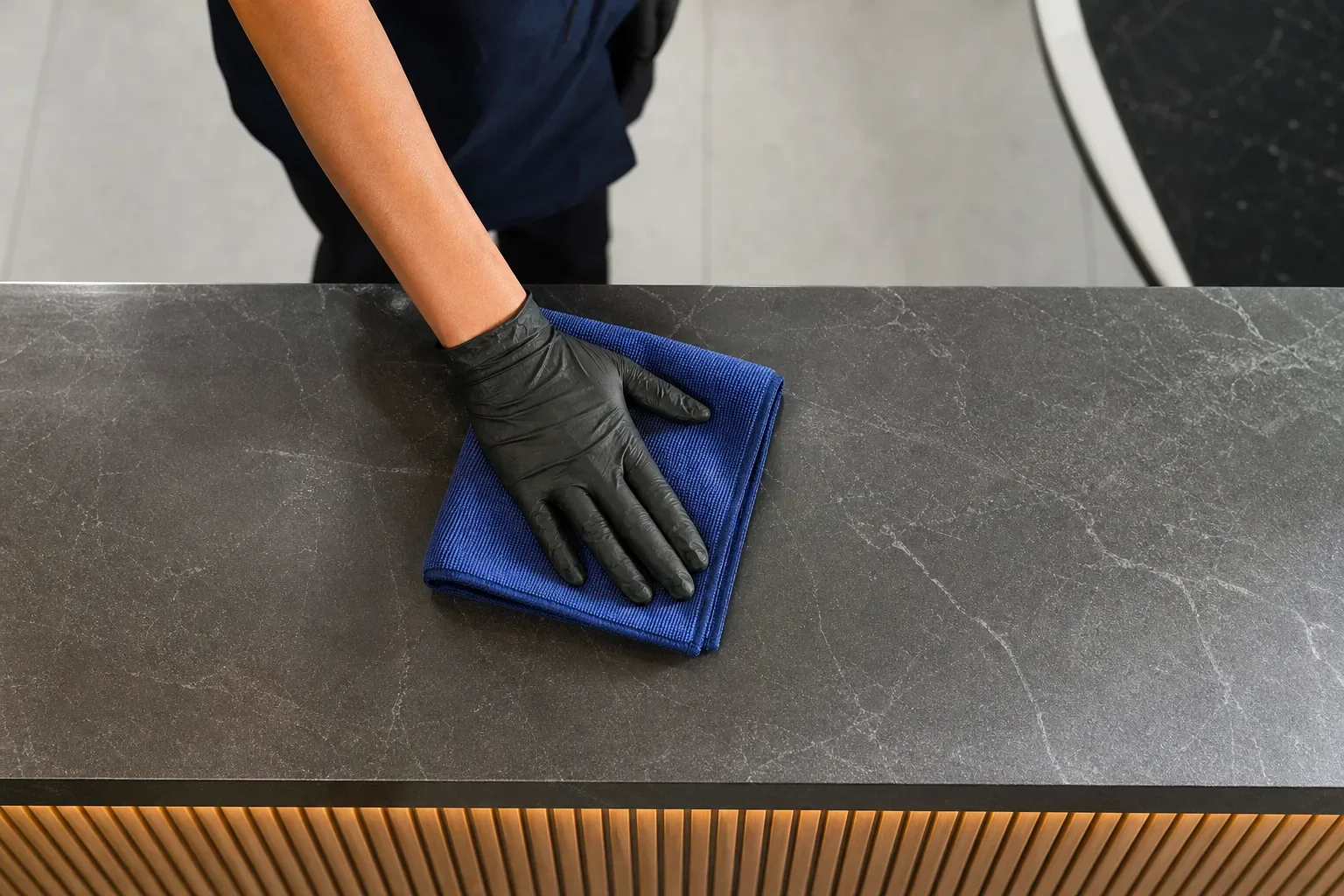
Daytime cleaning suits offices where security restrictions limit unsupervised after-hours access, or where the building is occupied around the clock. It is also increasingly common in open-plan workplaces where a visible cleaning presence is seen as part of the culture rather than a disruption.
Some tasks genuinely fit better within business hours. Restroom checks and restocking every two to three hours, kitchen wipe-downs after the lunch rush, and high-touch point sanitisation of door handles and lift buttons are all reactive tasks that need to happen while the building is in use. Trying to retrofit these into a single late-evening visit is less effective.
Daytime Cleaning and Staff Productivity
The concern most facility managers raise is noise and disturbance. A well-managed daytime cleaning team will follow a zoned schedule, cleaning unoccupied meeting rooms and corridors first and moving to occupied areas during natural breaks. Communication with your operations or facilities lead makes this workable in the majority of Glasgow office environments.
Where it becomes difficult is in open-plan floors with continuous phone or video-call activity. In those settings, vacuuming during core hours is rarely acceptable, and daytime cleaning becomes a partial solution supplemented by an out-of-hours visit for the heavier tasks.
Hybrid Schedules - What They Look Like in Practice
Many businesses land on a split approach. Light daytime attendance covers reactive tasks: kitchen cleaning, washroom checks, and spot-mopping. A dedicated out-of-hours visit, typically three times a week or daily depending on occupancy, handles vacuuming, floor mopping, full bin removal, and surface sanitisation.
Standard contract frequencies offered by Glasgow cleaning providers run to daily, three times per week, or weekly visits. A hybrid arrangement usually means two separate line items in the contract, so pricing transparency is worth pressing for at the quote stage. Standard office cleaning rates sit at £12–£18 per hour for routine contracted work. Deep cleans or specialist tasks such as carpet extraction or hard floor restoration are priced separately, with fixed-price quotes for a small office typically ranging from £150–£400 depending on size and condition.

Cost Implications of Each Approach
Out-of-hours cleaning does not automatically cost more than daytime cleaning. Hourly rates for routine cleaning remain in the same £12–£18 range regardless of shift timing in most Glasgow contracts. Where costs shift is in supervision, travel, and minimum-hours commitments. A contractor sending a single operative to a small office at 20:00 on a weekday may apply a minimum call-out of two hours even if the work takes ninety minutes.
Daytime cleaning, particularly if it involves a part-time operative working alongside your team, can sometimes be structured around a shorter paid window. If your office needs two hours of cleaning per day and your cleaner works 10:00–12:00, you are paying for exactly that time. After-hours minimum-hour clauses can erode that efficiency for smaller premises.
Getting an Accurate Quote
Provide any Glasgow contractor with your floor area in square feet, your daily occupancy level, your preferred cleaning frequency, and any specialist surface requirements before requesting a quote. A written quote should come back within 24–48 hours. Quotes based on a site visit will be more accurate than those given over the phone, particularly for offices above 2,000 sq ft or those with specialist flooring.
Which Industries Tend to Prefer Each Option
Law firms, accountancy practices, and financial services offices in Glasgow city centre almost universally opt for out-of-hours cleaning. Client-facing environments need to be immaculate before 9:00, and confidentiality concerns around document handling make unsupervised after-hours access with a trusted, vetted contractor preferable to a visible cleaning presence during client meetings.
Healthcare-adjacent offices, contact centres, and coworking spaces tend toward daytime or hybrid models. High footfall throughout the day means reactive cleaning is genuinely necessary rather than optional. A single late-evening visit will not keep a busy coworking kitchen acceptable through a full day of use.
Retail head offices and creative studios vary more widely, usually reflecting the preferences of whoever manages the office rather than a sector norm.

Environmental and Compliance Factors
Whichever schedule you choose, your contractor should be using biodegradable and low-VOC cleaning products as standard if you have opted for an eco-friendly service option. COSHH risk assessments for the products used on your site should be reviewed at least annually, and you should request sight of the current assessment when onboarding a new provider.
If you are switching from an existing cleaning contractor, TUPE regulations apply where staff from the outgoing provider transfer to the new one. Your incoming contractor should handle this process, but it is worth confirming their position on this in writing before contracts are signed.
Ready to Compare Options for Your Glasgow Office
Contact a Glasgow cleaning provider that offers both daytime and out-of-hours scheduling, and ask them to quote for each scenario against your actual floor plan and occupancy hours. That comparison is the fastest way to arrive at a decision based on real figures rather than assumptions. Most providers will turn around an initial written quote within 24–48 hours of receiving your brief.
Frequently Asked Questions
Is Out-of-hours Office Cleaning in Glasgow More Expensive Than Daytime Cleaning?
Not necessarily. Standard contracted office cleaning rates in Glasgow run at £12–£18 per hour regardless of shift timing. After-hours work can carry minimum call-out clauses, typically two hours, which may add cost for smaller offices. Ask any provider to quote both options explicitly so you can compare like for like.
What Security Checks Should I Expect from an Out-of-hours Cleaning Contractor in Glasgow?
Any reputable provider should conduct a Basic Disclosure Scotland check on every operative as a minimum. For roles involving vulnerable groups, operatives should be registered under the PVG scheme. The contractor should also carry public liability insurance of at least £5 million and provide written confirmation of both before work begins.
Can I Have a Cleaning Contract That Covers Both Daytime and Out-of-hours Visits?
Yes. Hybrid contracts are common in Glasgow, particularly for busy offices where reactive daytime cleaning is needed alongside a thorough out-of-hours clean. These are usually structured as two separate service lines within one contract, so request itemised pricing for each element.
How Quickly Can I Get a Quote for Out-of-hours Office Cleaning in Glasgow?
Most established Glasgow cleaning providers will return a written quote within 24–48 hours of receiving your enquiry. For offices above 2,000 sq ft, or those with specialist flooring, a site visit will produce a more accurate figure than a phone estimate.
What Happens to the Existing Cleaning Staff If I Switch to a New Contractor?
TUPE regulations apply when you change commercial cleaning contractor and staff from the outgoing provider transfer to the new one. Your incoming contractor is responsible for managing this process, but you should confirm their approach in writing before the contract is signed to avoid disputes during the transition.