 Glasgow Office Cleaning
Office Cleaning Standards & Compliance Glasgow

Why Standards Matter More Than a Mop and Bucket
Glasgow businesses face the same legal and reputational pressures as anywhere in the UK, but the density of professional services firms, healthcare-adjacent offices, and food-handling workplaces in the city makes compliance a sharper concern than many owners initially expect. A cleaning programme that simply makes a space look tidy is not the same as one that meets HSE guidance, Environmental Health expectations, or the conditions of your insurance policy. The gap between the two can expose you to enforcement notices, liability claims, or failed audits.
The Health and Safety at Work Act 1974 and the Workplace (Health, Safety and Welfare) Regulations 1992 place specific duties on employers to maintain clean, safe working environments. Neither piece of legislation specifies a cleaning frequency in hours, but both establish a standard of reasonable cleanliness that an enforcement officer can measure against observable conditions. Documented cleaning schedules, completed checklists, and COSHH assessments are your evidence that those duties are being met.
What a Compliant Office Cleaning Contract Looks Like
A contract that meets current standards in Glasgow will include several non-negotiable components. The cleaning provider should carry a minimum of £5 million public liability insurance, and you should ask to see the certificate before work begins. Staff should be vetted through Disclosure Scotland, with a Basic Disclosure as the minimum and PVG scheme checks for any roles involving access to vulnerable groups.
COSHH assessments for every cleaning product used on-site must be held by the contractor and made available to your facilities manager on request. HSE guidance requires these assessments to be reviewed at least annually. If a contractor cannot produce current COSHH documentation within a few days of being asked, that is a meaningful red flag.
Frequency and Documentation
Standard contract options run on three tiers: daily, three times per week, or weekly. The right frequency for your office depends on footfall, the nature of work carried out, and any sector-specific requirements such as food handling or clinical adjacency. Daily cleaning is the norm for high-traffic Glasgow city-centre offices where shared kitchens, washrooms, and open-plan desks accumulate contamination quickly.
Every visit should produce a completed cleaning log. That log becomes part of your compliance record, demonstrating a consistent standard of care if you ever face an Environmental Health inspection or an employee complaint.
How ISO Cleaning Standards Apply to Office Environments in Glasgow
ISO 9001 (quality management) and ISO 14001 (environmental management) are the two standards most directly relevant to commercial cleaning contracts. ISO 9001 sets a framework for consistent service delivery, requiring cleaning companies to document processes, train staff to measurable outcomes, and audit their own performance. ISO 14001 addresses the environmental impact of cleaning operations, covering product selection, waste disposal, and water use.
For Glasgow businesses, asking a prospective contractor whether they hold or are working toward BS EN ISO 9001 and BS ISO 14001 certification is a straightforward quality filter. It signals that their processes are independently audited rather than self-declared. You are not required to hold these certifications yourself, but contracting with a certified provider strengthens your own due-diligence position.
What Is the Difference Between Sanitisation and Standard Office Cleaning in Glasgow
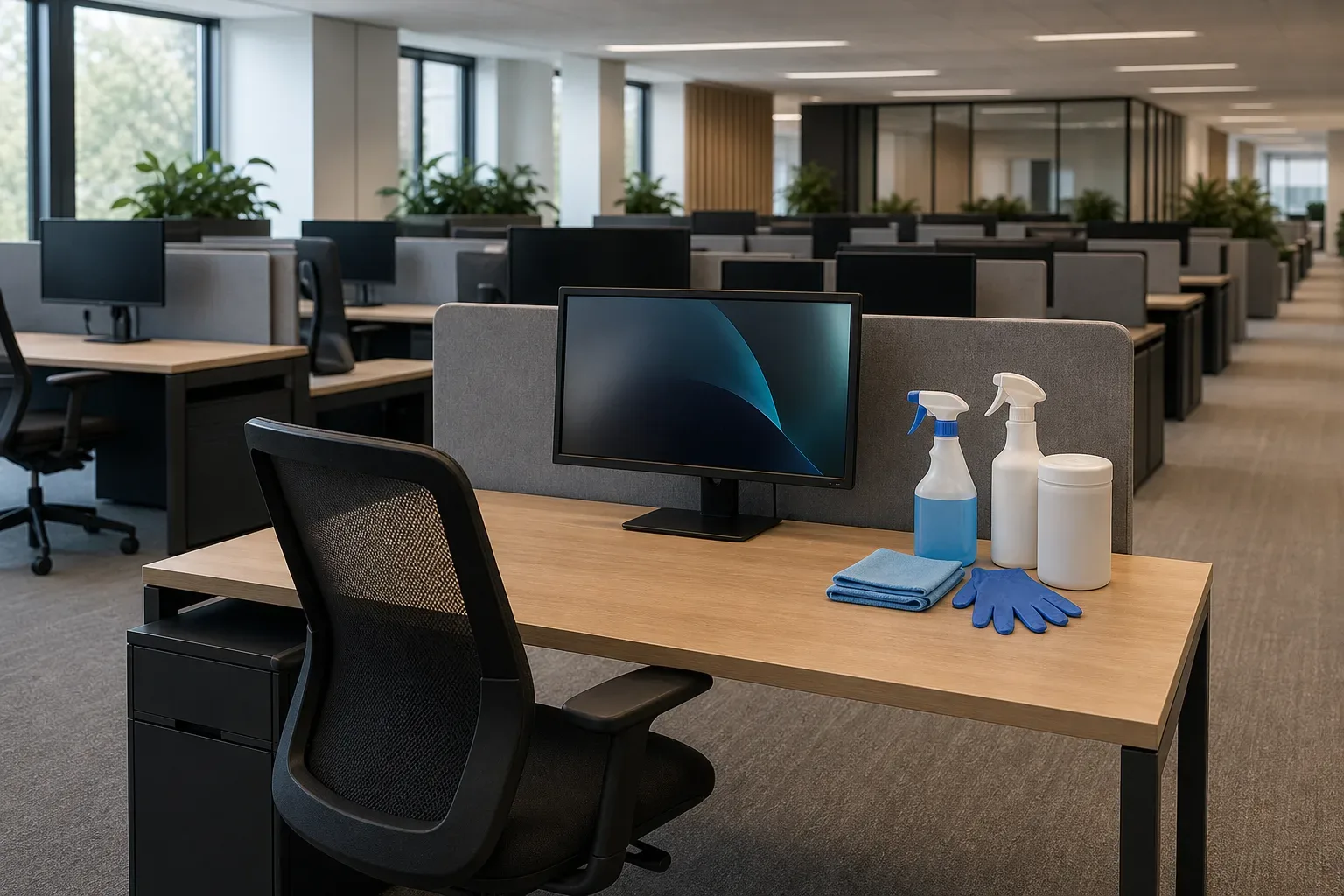
Standard office cleaning covers visible soil removal: vacuuming, surface wiping, bin emptying, and washroom replenishment. Sanitisation goes further, reducing microbial load on contact surfaces to levels defined by specific biocidal standards, typically using products approved under the Biocidal Products Regulation. The distinction matters because a visually clean desk can still carry significant bacterial contamination.
Sanitisation treatments are typically applied during periodic deep cleans or following a confirmed illness outbreak. One-off deep cleans for small offices up to approximately 1,000 sq ft are priced from £150–£400 depending on the scope of work, the products required, and access conditions. Standard contracted cleaning at £12–£18 per hour does not include sanitisation-grade product application unless that is explicitly written into the scope.

How Food Safety Standards Affect Office Kitchen Cleaning in Glasgow
Office kitchens that prepare or handle food for employees fall under the Food Hygiene (Scotland) Regulations 2006, which impose obligations on the business occupying the premises. Even a basic staff kitchen with a microwave, fridge, and kettle can trigger a requirement to maintain surfaces free of contamination likely to cause food poisoning. Environmental Health officers in Glasgow can and do inspect workplaces following complaints.
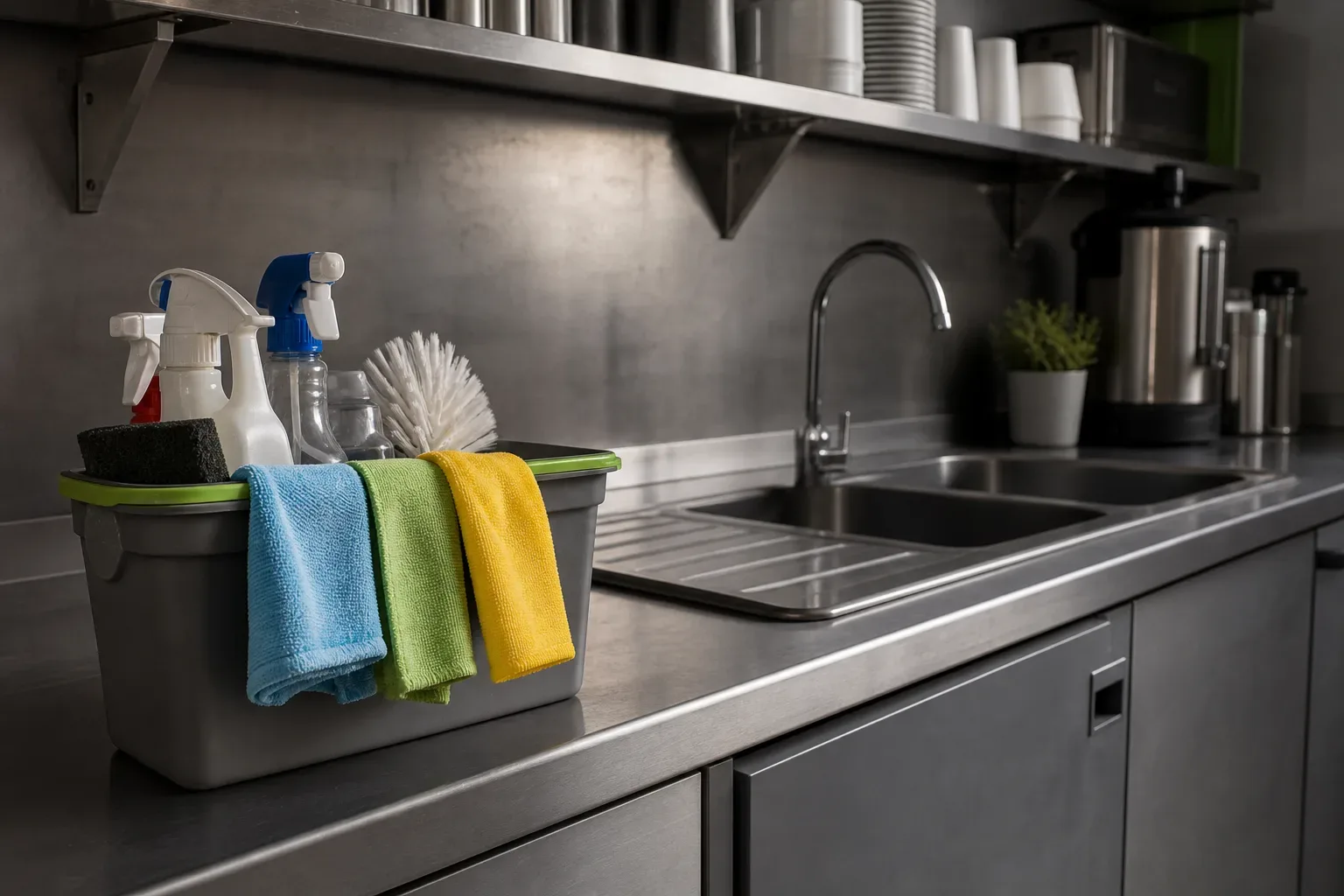
In practice, this means office kitchen cleaning should be scheduled more frequently than general office cleaning, documented separately, and carried out using food-safe sanitisers. Fridge interiors, microwave cavities, and sink surrounds are the areas most commonly cited in Environmental Health reports. If your cleaning contract does not specifically reference kitchen sanitisation as a distinct task with its own checklist, it is worth raising this with your provider before the next inspection cycle.
Do Employees Have a Legal Responsibility to Follow Good Personal Hygiene
Yes. Employees carry a duty under Section 7 of the Health and Safety at Work Act 1974 to take reasonable care for their own health and safety and that of colleagues. In a practical cleaning context, this covers handwashing compliance, correct disposal of food waste, and not leaving desk areas in a condition that creates pest or infection risk. Personal hygiene policies, displayed in staff areas and referenced in employment contracts, give employers a documented basis for addressing non-compliance.
This does not shift the primary compliance burden from the employer to the workforce. The employer remains responsible for providing adequate facilities, appropriate cleaning schedules, and clear written policies. Staff conduct is a contributing factor, not a substitute for a properly contracted cleaning programme.
Changing Cleaning Contractors Without Losing Compliance Ground
Switching providers mid-contract is one of the most common points at which compliance documentation gets lost. TUPE regulations apply when changing commercial cleaning contractor where staff transfer, meaning the incoming provider inherits employment obligations for the outgoing team. This has implications for induction records, training documentation, and COSHH familiarity.
Before any transition, secure complete copies of all cleaning logs, COSHH assessments, and staff vetting records from the outgoing provider. The incoming contractor should provide updated documentation within the first contract month. A three-month minimum contract term is standard in Glasgow, giving both parties enough time to establish consistent service and build a defensible compliance record from the outset.
Getting a Quote and Moving Forward
Providers operating across Glasgow typically turn around written quotes within 24–48 hours of an initial enquiry. When you make contact, have your approximate floor area, cleaning frequency preference, and any sector-specific requirements ready. Mentioning compliance documentation, insurance, and Disclosure Scotland checks in your first conversation is a quick and effective way to filter out providers who are not operating at the standard your business needs.
Request the COSHH documentation and insurance certificate as part of your evaluation, not as an afterthought once a contract is signed. A provider who makes this easy is demonstrating exactly the operational transparency that underpins a compliant cleaning programme.
Frequently Asked Questions
What Is the Difference Between Sanitisation and Standard Office Cleaning in Glasgow?
Standard office cleaning covers visible soil removal such as vacuuming, surface wiping, and bin emptying. Sanitisation reduces microbial load on contact surfaces using biocidal products approved under the Biocidal Products Regulation, going beyond what routine cleaning achieves. One-off deep cleans for small offices up to around 1,000 sq ft typically cost £150–£400 depending on scope and access conditions.
How Do ISO Cleaning Standards Apply to Office Environments in Glasgow?
BS EN ISO 9001 (quality management) and BS ISO 14001 (environmental management) are the two standards most directly relevant to commercial cleaning contracts. ISO 9001 requires cleaning companies to document processes and audit performance consistently. ISO 14001 addresses product selection, waste disposal, and environmental impact. Asking a Glasgow cleaning provider about certification against these standards is a practical quality filter.
How Do Food Safety Standards Affect Office Kitchen Cleaning in Glasgow?
Office kitchens fall under the Food Hygiene (Scotland) Regulations 2006, which require surfaces to be kept free of contamination likely to cause food poisoning. Environmental Health officers in Glasgow can inspect workplaces following complaints. Kitchen cleaning should be scheduled more frequently than general office cleaning, documented separately, and carried out using food-safe sanitisers on fridges, microwave cavities, and sink surrounds.
Do Employees Have a Legal Responsibility to Follow Good Personal Hygiene?
Yes. Under Section 7 of the Health and Safety at Work Act 1974, employees must take reasonable care for their own health and safety and that of colleagues. In a cleaning context this covers handwashing, correct food waste disposal, and keeping desk areas free of conditions that create pest or infection risk. This duty sits alongside, not instead of, the employer's obligation to provide adequate facilities and a properly contracted cleaning programme.
What Insurance and Vetting Should a Glasgow Office Cleaning Contractor Hold?
A compliant contractor should carry a minimum of £5 million public liability insurance and provide the certificate before work begins. Staff should be vetted through Disclosure Scotland, with a Basic Disclosure as the minimum standard and PVG scheme checks for roles involving access to vulnerable groups. COSHH assessments for every product used on-site should be available on request and reviewed at least annually.