 Glasgow Office Cleaning
CQC & Food Safety Cleaning Compliance for Glasgow Premises
Why Compliance Standards Matter for Glasgow Businesses
Food safety and healthcare cleaning compliance are legal obligations, not optional upgrades. Glasgow businesses operating in food production, hospitality, care homes, or clinical environments face inspection by the Food Standards Scotland (FSS), Environmental Health Officers from Glasgow City Council, or the Care Inspectorate. A single failed inspection can result in improvement notices, temporary closure, or reputational damage that takes months to recover from.
The legal framework draws from several sources: Regulation (EC) No 852/2004 on food hygiene (retained in UK law post-Brexit), the Food Safety Act 1990, and the Health and Social Care Standards for care settings. Each imposes documented cleaning obligations, not just observable cleanliness. Paperwork, schedules, and product records all count.
What Food Safety Cleaning Compliance Is Required in Glasgow?
Glasgow food businesses must follow hazard-based cleaning protocols aligned with Food Standards Scotland guidance and the retained EU hygiene regulations. This means implementing a documented cleaning schedule that covers every surface in contact with food, every piece of equipment, and every area adjacent to food preparation. The schedule must specify product names, dilution rates, contact times, and responsible staff.
Environmental Health Officers from Glasgow City Council conduct unannounced inspections under the Food Hygiene Information Scheme. They assess cleaning effectiveness alongside temperature controls, pest management, and staff training. A poorly maintained cleaning log is as damaging as a dirty surface because it signals that cleaning is unmanaged.
HACCP and Cleaning Procedures
Any Glasgow food business with five or more employees must have a fully documented Hazard Analysis and Critical Control Points plan. Cleaning procedures are a core HACCP prerequisite. The plan must identify contamination risks from inadequate cleaning, set corrective actions, and confirm that cleaning procedures are verified regularly. Many businesses use a Cleaning In Place record for fixed equipment such as mixers, slicers, and chiller units.
Smaller premises with fewer than five employees still need cleaning procedures in writing, though they may use the FSS Safer Food, Better Business toolkit as a simplified alternative. Glasgow City Council's Environmental Health team can advise on which approach applies to a specific premises.
How Often Should Food Preparation Areas Be Cleaned According to Glasgow Food Safety Standards?
Food contact surfaces must be cleaned and sanitised after every use or at minimum between tasks involving different food types. Non-food contact surfaces such as walls, floors, and storage shelving require scheduled daily cleaning. Fridges and cold rooms typically require a documented weekly clean, with deep cleans carried out at least monthly or whenever contamination is suspected.
The principle is that frequency must match risk. A high-volume butchery or fishmonger operates at higher contamination risk than a dry-goods store, so cleaning intervals must be correspondingly shorter. Cleaning schedules should be signed off by the responsible person on each shift, creating an auditable trail for inspection.
High-Touch and High-Risk Zones
Door handles, light switches, tap heads, and equipment controls are contamination transfer points that require sanitising at least twice daily in busy commercial kitchens. Drain channels in food preparation areas need particular attention: blocked or poorly sanitised drains are among the most common Environmental Health advisory points raised in Glasgow premises inspections. Specialist drain cleaning with appropriate enzymatic products should feature in any compliant schedule.
What Certifications Should Food Safety-Compliant Cleaners in Glasgow Have?
Cleaning operatives working in regulated food or clinical environments should hold, at minimum, Level 2 Award in Food Safety in Catering or an equivalent qualification recognised by FSS. Supervisors overseeing cleaning in higher-risk settings benefit from Level 3 qualifications. These are not mandatory by statute for every operative, but they demonstrate due diligence and form part of the inspection evidence picture.
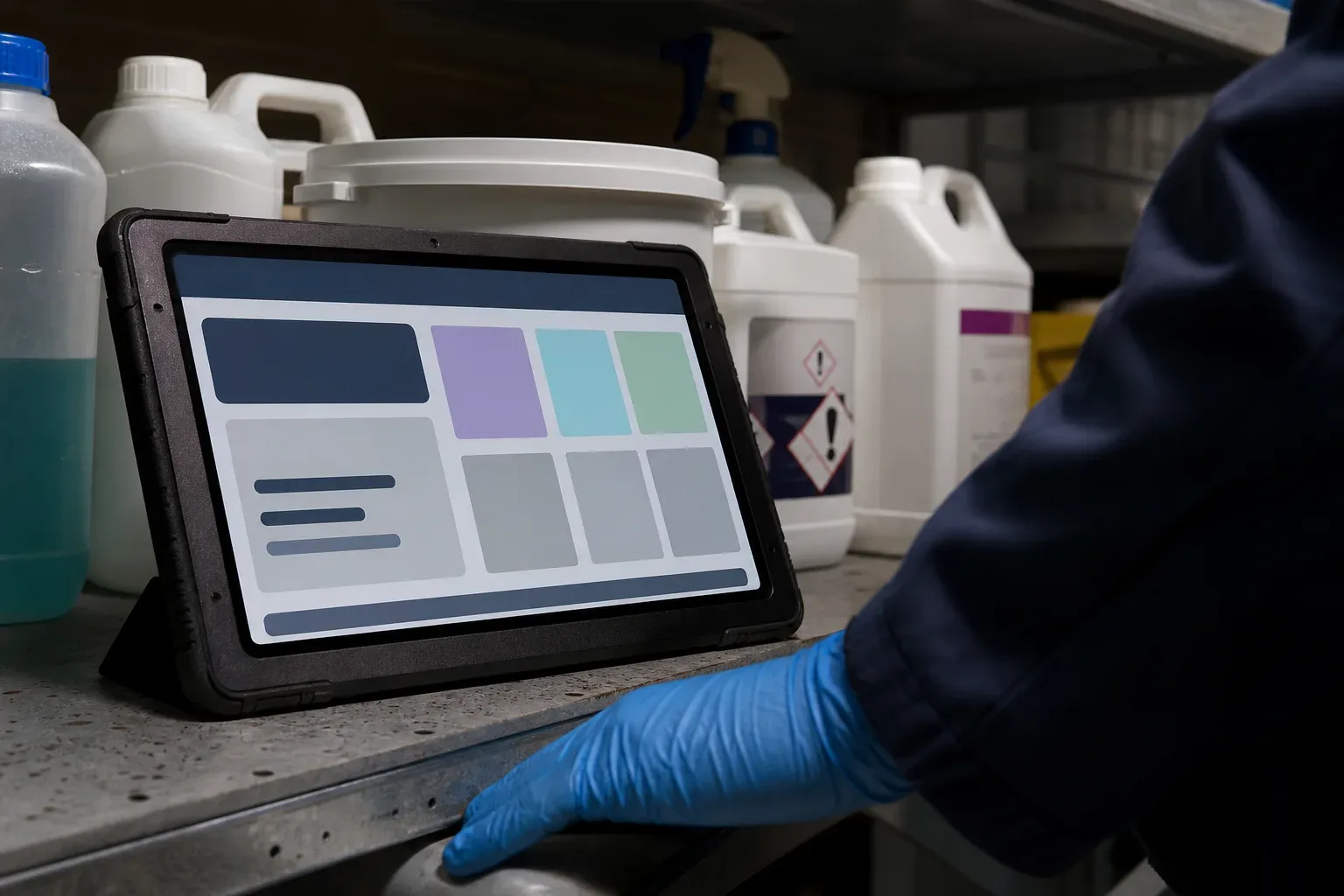
Beyond food safety training, Glasgow businesses should confirm that any contracted cleaning company carries public liability insurance of at least £5 million, holds relevant COSHH assessments covering every product used on-site, and can produce method statements for each cleaning task. COSHH assessments should be reviewed at least annually and updated whenever products change.
Disclosure Scotland Vetting
For cleaning operatives working in care homes, GP surgeries, or any premises where vulnerable people are present, Basic Disclosure Scotland checks are the minimum requirement. Roles with direct, unsupervised access to vulnerable groups require PVG scheme membership. Never accept a CRB check or DBS reference from Scottish cleaning contractors: those systems apply to England and Wales. Processing times for Basic Disclosure Scotland checks run up to 14 days, so factor this into mobilisation planning when switching contractors.
Cleaning Standards for Care and Clinical Settings
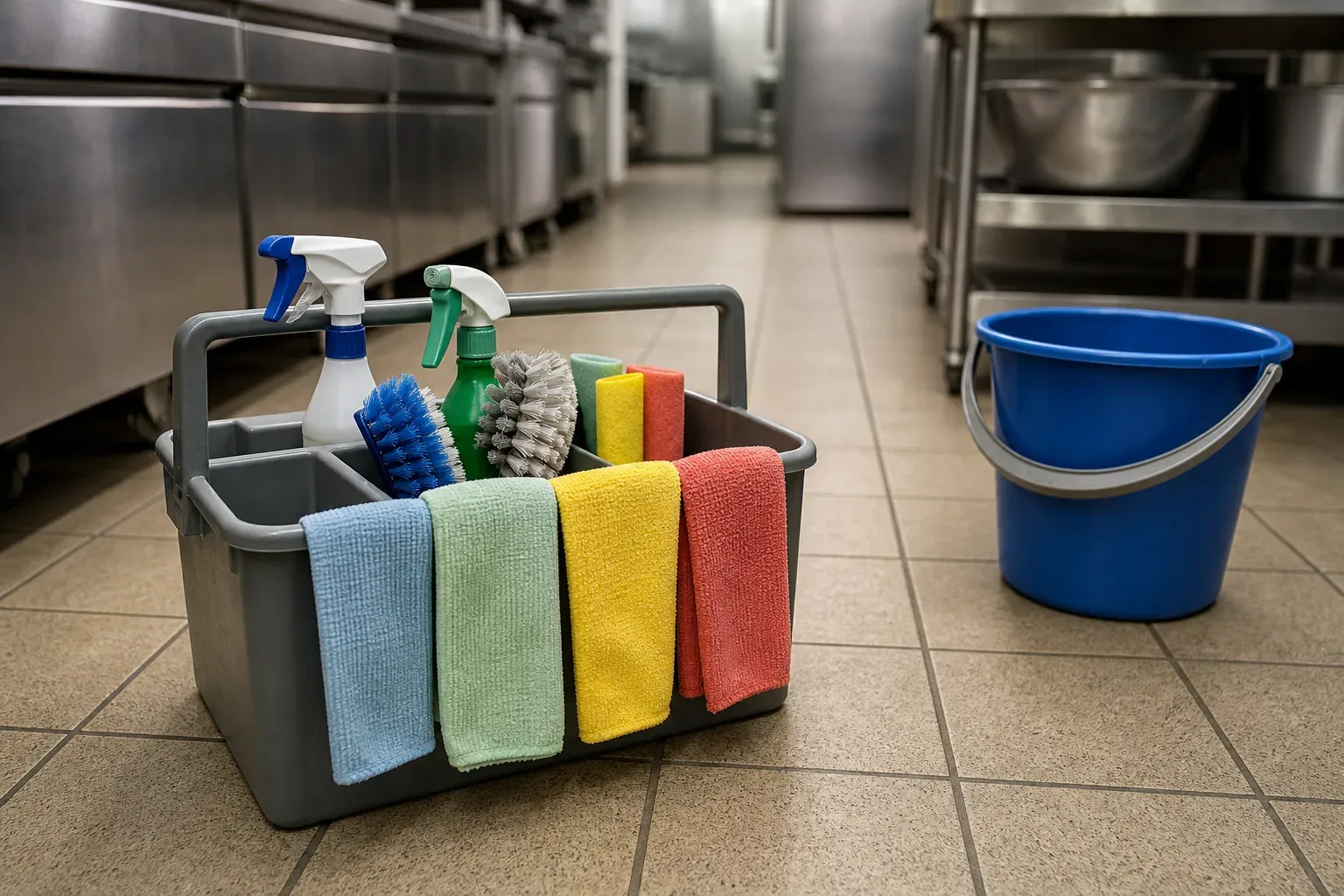
Glasgow care homes and healthcare facilities operate under the National Cleaning Services Specification for NHS Scotland and the Care Inspectorate's Health and Social Care Standards. These require colour-coded equipment systems (typically aligned to the British Institute of Cleaning Science BICS framework), specific product approvals for clinical-grade disinfectants, and documented audit frequencies.
The Care Inspectorate grades cleanliness as part of its quality themes framework. Persistent low scores in environmental cleanliness contribute directly to an overall grade reduction, which is published publicly. Commissioning a cleaning contractor who cannot evidence compliance with these frameworks is a governance risk that falls squarely on the registered provider.
Microfibre and Single-Use Protocols
Single-use or pre-impregnated microfibre cloths are strongly recommended in clinical and food preparation environments. Reusable cloths require laundering at 60°C or above between uses to destroy common pathogens including Listeria monocytogenes and E. coli O157. Any contractor claiming compliant clinical or food-safe cleaning while using loose cotton cloths washed inconsistently should be treated with scepticism.
Eco-Friendly Options Within Compliant Cleaning
Biodegradable and low-VOC cleaning products are available for most food-safe and clinical-grade applications. These products reduce indoor air quality risks for kitchen staff and care home residents, and they can satisfy environmental commitments without compromising hygiene outcomes. The critical requirement is that any product used in a regulated environment holds appropriate biocidal product authorisation under the UK Biocidal Products Regulation.
If your cleaning contractor references ISO 14001 environmental management accreditation alongside BS EN ISO 9001 quality management, ask to see the certificates and confirm the scope covers the services being delivered to your premises. Accreditation scope matters: a certificate that excludes on-site food or clinical cleaning is of limited value as compliance evidence.
Getting a Compliant Cleaning Contract in Place
A compliant cleaning contract for a Glasgow food business or care setting should specify the cleaning schedule, product list, operative training records, COSHH assessments, insurance details, and an agreed audit and reporting mechanism. Standard commercial cleaning contracts run from a 3-month minimum term. For regulated premises, a longer initial term allows the contractor time to embed documented procedures and produce inspection-ready records.
Request a written quote within 24–48 hours and ask specifically whether the contractor has experience with FSS or Care Inspectorate inspection environments. References from comparable Glasgow premises carry more weight than generic testimonials. Once you have the schedule and product list agreed in writing, you are in a defensible position if an inspector arrives unannounced.
Frequently Asked Questions
What Food Safety Cleaning Compliance Is Required in Glasgow?
Glasgow food businesses must follow documented cleaning procedures aligned with Regulation (EC) No 852/2004 (retained in UK law), the Food Safety Act 1990, and Food Standards Scotland guidance. This includes written cleaning schedules covering all food contact surfaces, HACCP prerequisite programmes, signed cleaning logs, and product records with dilution rates and contact times. Environmental Health Officers from Glasgow City Council inspect these records during unannounced visits under the Food Hygiene Information Scheme.
How Often Should Food Preparation Areas Be Cleaned According to Glasgow Food Safety Standards?
Food contact surfaces must be cleaned and sanitised after every use or between tasks involving different food types. Non-contact surfaces such as floors and walls require daily cleaning. Fridges and cold rooms typically need a documented weekly clean and a deep clean at least monthly. High-touch points like tap heads, door handles, and equipment controls should be sanitised at least twice daily in busy commercial kitchens. Frequency must reflect the contamination risk level of the specific operation.
What Certifications Should Food Safety-compliant Cleaners in Glasgow Have?
Cleaning operatives in food environments should hold at minimum a Level 2 Award in Food Safety in Catering or an equivalent qualification recognised by Food Standards Scotland. Supervisors in higher-risk settings benefit from Level 3 qualifications. Contracted cleaning companies should also carry public liability insurance of at least £5 million, hold current COSHH assessments for every product used, and be able to produce method statements. For care or clinical settings, Basic Disclosure Scotland checks are the minimum vetting requirement for operatives.
Does TUPE Apply If I Change My Cleaning Contractor in Glasgow?
Yes. TUPE regulations generally apply when a Glasgow business changes its commercial cleaning contractor and the cleaning staff transfer to the new provider. This means the incoming contractor inherits the existing employees on their current terms and conditions. Both the outgoing and incoming contractors have obligations to inform and consult affected employees. It is advisable to take specific legal advice before initiating a contractor change, particularly where a substantial cleaning team is involved.
What Records Does a Glasgow Food Business Need to Keep for Cleaning Compliance?
A Glasgow food business should retain signed daily cleaning logs, the written cleaning schedule identifying tasks, frequencies, products, dilution rates, and responsible operatives, COSHH assessments reviewed at least annually, and training records for all staff carrying out cleaning tasks. For HACCP-required businesses, cleaning verification records and any corrective actions taken must also be documented. These records are examined by Environmental Health Officers during inspections and can determine whether an improvement notice is issued.