 Glasgow Office Cleaning
Window Cleaning for Glasgow Office Buildings

Why Office Window Cleaning Glasgow Matters for Your Business
Dirty windows signal neglect before a visitor even enters your building. In Glasgow's city centre, where rain, traffic pollution, and construction dust are constants, glazing degrades visibly within weeks of cleaning. Clients, tenants, and staff notice the difference, and facilities managers are accountable for it.
Beyond appearances, neglected glass accumulates mineral deposits and grime that become harder and more expensive to remove over time. A consistent cleaning schedule protects the glazing itself, not just the impression it creates.
What Professional Window Cleaning Costs in Glasgow
Commercial window cleaning in Glasgow typically runs £50–£200 per visit for office premises. That wide range reflects building size, storey height, and access method. A ground-floor city-centre office suite costs considerably less per visit than a multi-storey block requiring reach-and-wash equipment or abseiling.
For large buildings requiring specialist access, pricing shifts to a quoted project rate rather than a standard per-visit figure. Request itemised quotes that break out access, labour, and any traffic management costs separately. That makes it straightforward to compare suppliers.
Frequency and Contract Structure
Most Glasgow office cleaning contracts offer three standard frequency tiers: daily, three times per week, or weekly. For window cleaning specifically, monthly or quarterly schedules are common, depending on the building's exposure to pollution and weather.
A typical contract minimum runs three months. That commitment gives your provider time to establish a reliable rota and means you are not paying premium rates for one-off visits. If you need a single pre-event clean, expect to pay towards the upper end of the per-visit range.

Access Methods and Building Types
Access method is the primary cost driver in commercial window cleaning. Single-storey or low-rise offices in areas such as the West End or the Merchant City are usually served by water-fed pole systems, which clean safely from ground level using purified water.
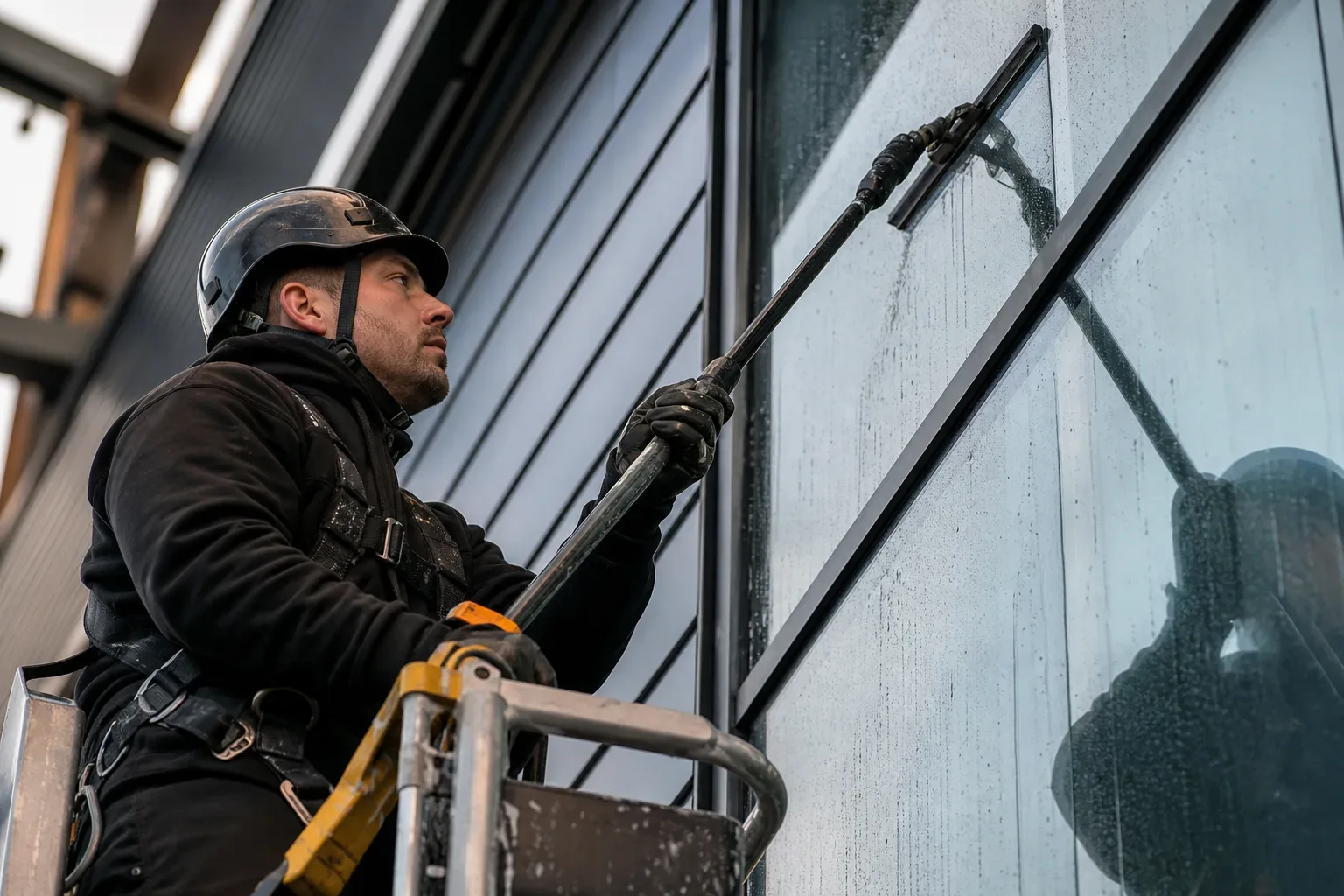
Taller buildings across the Glasgow skyline require either cherry-picker platforms, rope access technicians, or cradle systems fixed to the roof structure. Each carries different insurance, risk assessment, and scheduling requirements. Confirm that your provider holds the correct IPAF certification for any platform work and that their public liability cover meets at least £5 million.
Internal vs External Cleaning
Most commercial contracts cover external faces only as the default scope. Internal cleaning requires separate scheduling, since it means working inside occupied office space. Many facilities managers arrange internal cleans quarterly and externals monthly, negotiating both into a single contract to simplify invoicing.
Vetting and Compliance for Glasgow Premises
Any contractor working inside your building should carry staff vetted to at least Basic Disclosure Scotland standard. For premises where cleaning staff interact with vulnerable groups, the PVG scheme applies. Processing a Basic Disclosure Scotland check takes up to 14 days, so factor that into your onboarding timeline when switching suppliers.
Public liability insurance of at least £5 million is a baseline requirement, not a differentiator. Ask to see the certificate directly rather than accepting a verbal assurance. Reputable Glasgow providers will supply it without hesitation.
COSHH assessments for cleaning products used on-site should be reviewed at least annually. Pure water systems used in water-fed pole cleaning carry minimal COSHH risk, but any chemical additives used for heavy soiling or hard water deposits need to be covered in your site-specific assessment.
Integrating Window Cleaning Into a Wider Cleaning Contract
Window cleaning sits naturally alongside other commercial cleaning services. Bundling it with your regular office cleaning contract, whether daily, three times weekly, or weekly, creates a single point of accountability and often reduces the per-service cost.
Providers who already hold a contract for internal office cleaning can schedule window work around your occupancy patterns, avoiding disruption during peak hours. That coordination is harder to achieve with a separate specialist supplier who does not know your building's rhythm.
If your premises have recently undergone construction or refurbishment, a one-off post-build window clean is worth commissioning before the regular rota resumes. Construction dust and adhesive residue require different treatment than standard atmospheric grime.

Getting a Quote for Your Glasgow Office
A written quote should reach you within 24–48 hours of your initial enquiry. Any provider that cannot meet that turnaround is likely managing more work than their scheduling allows, which is itself a signal worth noting before you commit.
Provide the following when you make contact: approximate floor area, number of storeys, the type of glazing (curtain wall, individual frames, roof lights), and your preferred cleaning frequency. That information allows a provider to price accurately rather than issue a broad estimate that shifts after a site visit.
Ask specifically whether the quote includes VAT, what happens if a visit is missed due to weather, and how they handle reactive cleans between scheduled visits. Clear answers to those three questions separate professional operators from those padding out a cheap headline rate.
Switching Providers - What You Need to Know
If your current window cleaning contractor employs staff whose role is substantially dedicated to your contract, TUPE regulations may apply when you change supplier. This is particularly relevant for larger Glasgow offices where a cleaner spends the majority of their working week on your premises. Take specific legal advice before serving notice on an existing contract.
Notice periods in commercial cleaning contracts typically run one to three months. Check your existing agreement carefully before approaching alternative suppliers to avoid an overlap in contractual obligations.
Switching is straightforward when handled correctly. A new provider carrying out a thorough site survey before the contract starts will price accurately, understand your access constraints, and avoid the scheduling issues that often cause facilities managers to change suppliers in the first place.
Frequently Asked Questions
Do Window Cleaners Clean Inside and Out?
Most commercial window cleaning contracts cover external faces as the default scope. Internal cleaning can be added, but it requires separate scheduling since it involves working inside occupied office space. Many facilities managers arrange internal cleans quarterly and external cleans monthly, combining both into a single contract.
Is Dawn and Vinegar Good to Clean Windows?
A diluted dish soap and vinegar mix can shift light surface grime on small domestic panes, but it is not suitable for commercial glazing. It leaves streaks on larger glass surfaces, risks damaging frame seals and coatings, and does not remove the mineral deposits or atmospheric soiling typical on Glasgow office buildings. Professional contractors use purified water systems or approved commercial glazing products instead.
What Not to Use to Clean Windows?
Avoid abrasive cloths or scourers, which scratch glass permanently. Newspaper, though sometimes recommended, leaves ink residue. Undiluted bleach can damage frame seals and tint films. Hard tap water used without a purification system leaves mineral deposits as it dries, which is precisely the problem water-fed pole systems are designed to prevent.
Is Fairy Liquid Ok to Clean Windows?
A very small amount of Fairy or similar washing-up liquid diluted in water is a reasonable occasional solution for domestic windows, but it is not appropriate for commercial office glazing. The surfactants leave a residue that attracts dust quickly, and on large panes it is very difficult to rinse completely without streaking. Professional window cleaners use purpose-formulated products or pure water to avoid these issues.
What Do Professional Window Cleaners Use in Water?
Most commercial window cleaners in Glasgow now use purified water delivered through water-fed pole systems. The water is filtered through reverse osmosis and deionisation units to remove dissolved minerals, so it dries without leaving spots or streaks. For heavy soiling or hard water staining, contractors may add approved non-ionic surfactants or specialist glass restoration products, all of which should be covered by a site COSHH assessment.